
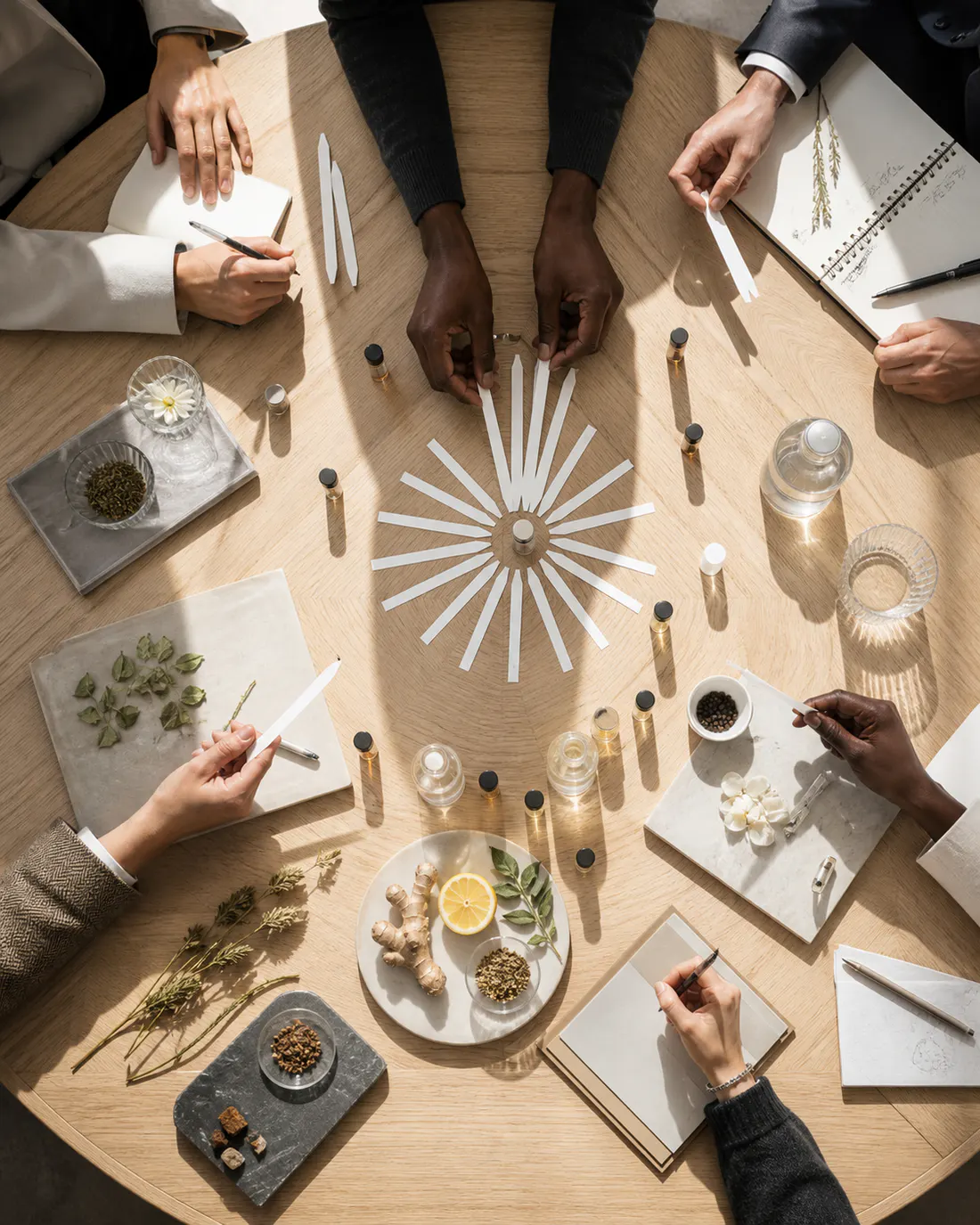
In 2025, an Associated Press reporter received a short lesson in selling fragrance at Macy's. A Dior manager explained the collection, demonstrated how to approach customers and sent the reporter onto the shop floor.
The result was humbling. During thirty minutes at the counter, the reporter persuaded three people to smell something and sold nothing. The entire account is funny, honest and worth reading.
Thirty minutes is a trailer for training. The full film takes much longer.
A fragrance house can spend years creating a product, ship it across oceans and place it inside a beautiful store. Then an uncertain adviser picks it up and says, 'This one is sweet and strong.'
Years of work have just fallen through the cracks.
The bottle cannot explain itself
Fragrance develops in slow motion. The opening appears quickly; the heart takes time; the base may remain on skin for hours. The customer usually makes a decision before the full composition has revealed itself.
The adviser becomes a translator. They help the customer connect an invisible product with something familiar: a memory, a mood, an occasion or a version of themselves.
That requires judgement. Some customers want the complete story. Others want silence and a blotter. Some people love technical detail. Others hear 'Iso E Super' and mentally leave the building.
The best advisers read the room.
Two counters can be chalk and cheese
A specialist perfumery in Nairobi may serve a different customer from a department store in Johannesburg. Two counters inside the same city can also be chalk and cheese.
Some customers arrive knowing the perfumer, launch date and note pyramid. Others find fragrance counters intimidating; the rows of bottles and unfamiliar language can feel like arriving late to a party where everyone else knows each other. This sense of intimidation helped inspire at least one founder to create a more welcoming fragrance brand.
Global training gives teams a common foundation. Local coaching helps advisers use those foundations without sounding like recorded announcements.
Space believes the Maison should remain recognisable everywhere. The conversation can still speak with a local accent.
Launch day creates a sugar rush
Launch training feels productive. The room looks polished, the presentation runs smoothly and everyone leaves carrying samples and enthusiasm.
Then normal retail life returns.
Staff members move. Testers disappear. New collections arrive. Three months later, much of the presentation has evaporated into thin air. Retail workers themselves regularly ask online for help turning fragrance knowledge into customer conversations.
Training needs repetition. Store visits reveal which stories have survived and where confidence is fading. Coaching gives advisers room to practise with real customers, real objections and the occasional person who wants to smell twelve fragrances in six minutes.
Customers bring the internet
Many customers arrive carrying a second adviser in their pocket.
TikTok, YouTube and fragrance forums have already told them about projection, longevity, layering and 'compliment getters'. Some know exactly what they want. Some have absorbed a cloud of contradictory opinions.
The retail adviser has to clear the fog. They should understand what the customer has heard, correct obvious confusion and bring the conversation back to the skin.
This demands current knowledge. A training manual frozen in time will age like milk.
The counter keeps receipts
Sales figures show the outcome. The counter often explains the cause.
Which fragrance attracts attention and loses it? Which question appears every day? Which bottle turns first-time visitors into repeat customers? These observations can improve assortment, marketing and training.
Space sees retail education as part of distribution. Delivery places the product on the shelf. Training protects what happens next.
The final metre is short... its shadow can stretch across the entire market.